



Healthcare systems around the world are under pressure. Rising patient loads, staff shortages, and slow manual processes create delays that affect both outcomes and revenue. Moreover, modern healthcare requires speed and accuracy that traditional methods simply cannot deliver. That is where AI for Healthcare is making a measurable difference. It improves diagnosis, reduces errors, and strengthens hospital operations with data-backed decisions. Additionally, it speeds up processes that currently slow patient care.
The New Era of AI for Healthcare
AI for Healthcare is reshaping how hospitals deliver faster diagnosis and better patient care. Artificial intelligence is no longer a distant dream. It now supports medical teams by reducing workload, improving accuracy and helping doctors make informed decisions quickly. In 2025, AI for Healthcare is becoming essential for high-quality and efficient treatment.
How AI for Healthcare Delivers Real Impact
AI tools are transforming healthcare by offering faster diagnosis, smarter patient management, and improved efficiency. Here are the major areas where hospitals see clear results.
1. Faster and More Accurate Diagnostics
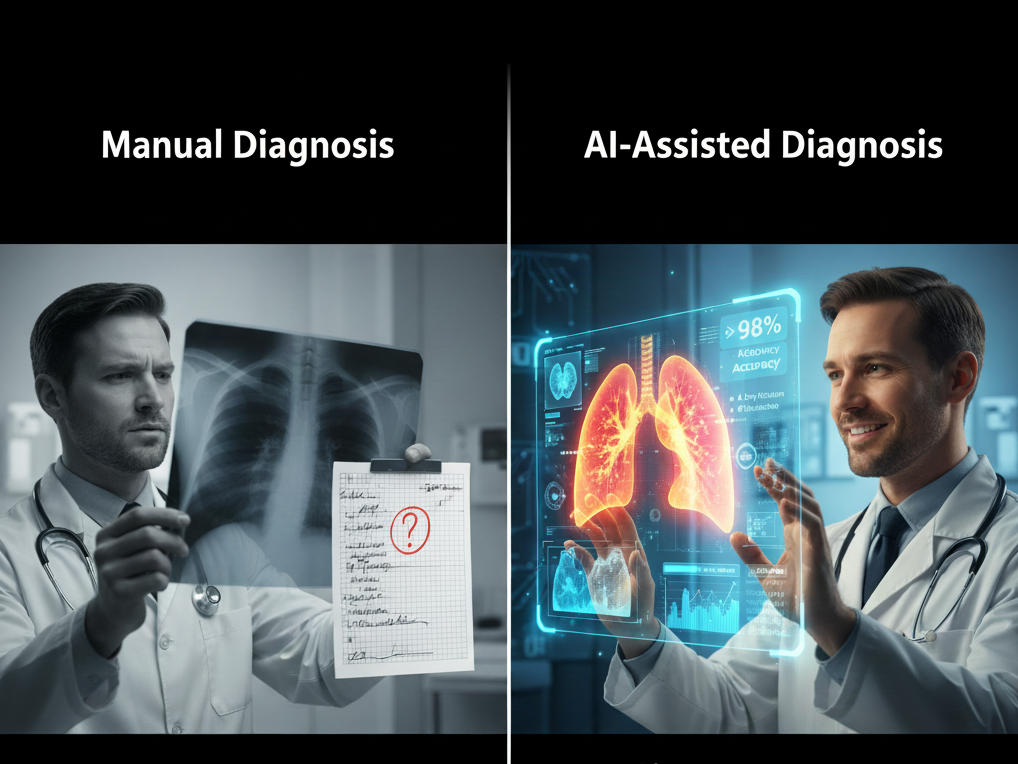
AI models help radiologists and clinicians detect diseases earlier by analyzing medical scans with high accuracy. For example, AI-assisted radiology can reduce interpretation time by up to 40 percent while improving detection rates for conditions such as tumors, fractures and lung abnormalities. In many cases, AI identifies early-stage issues that may be missed during routine checks. Therefore, patients receive timely treatment and better outcomes. Furthermore, AI reduces the burden on radiologists by automating initial scan reviews.
AI is already showing strong results in clinical settings. According to a World Health Organization article, regulators and partners are focused on advancing safe and equitable AI in healthcare. These principles ensure AI delivers faster diagnosis and better patient care while protecting quality and trust.
2. Predictive Analytics for Patient Care
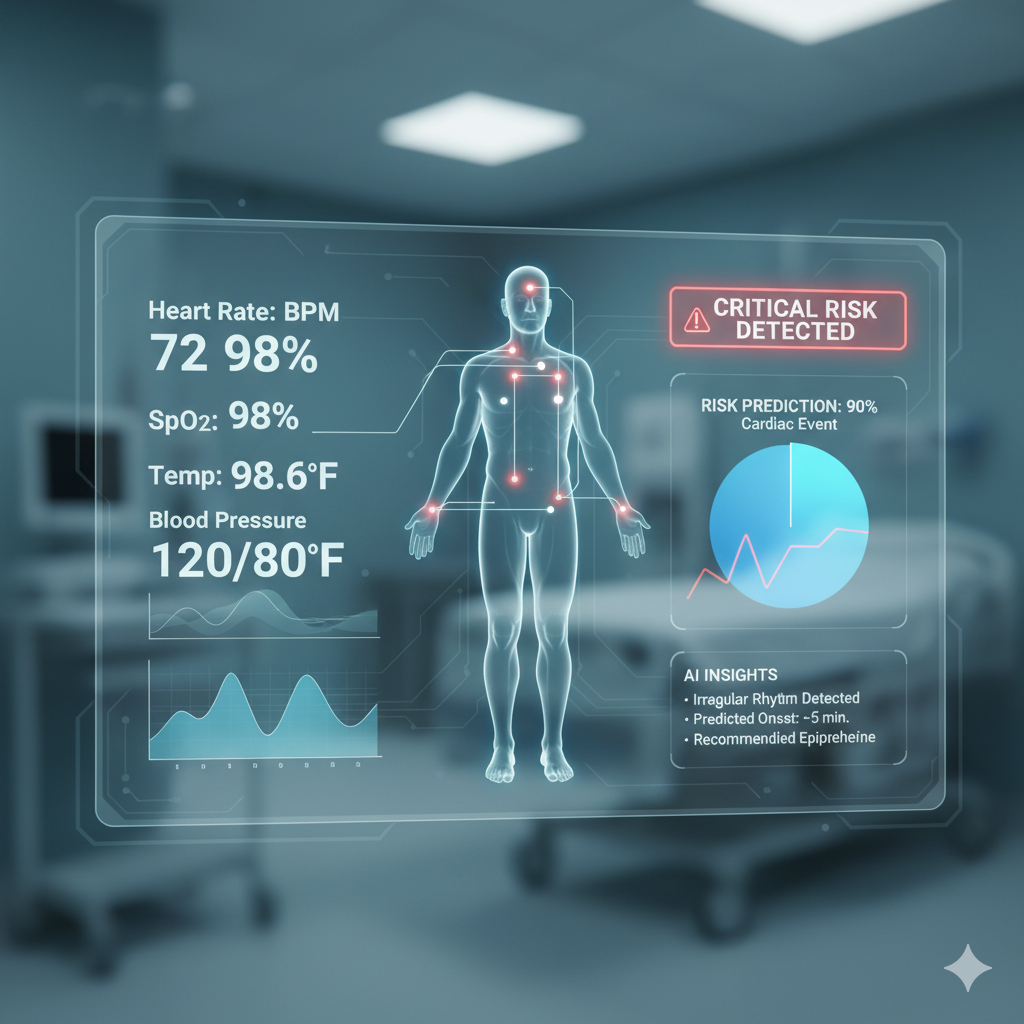
Hospitals use predictive algorithms to identify patients at risk of complications. For example, these models analyze vitals, lab results, and historical data to forecast problems before they occur. As a result, hospitals report improvements such as a 20 to 30 percent reduction in emergency admissions and faster intervention for high-risk cases.
3. Enhanced Clinical Workflow Efficiency
In addition to clinical care, AI automates routine tasks including appointment scheduling, report generation, triage, and follow-up reminders. This reduces administrative load by as much as 50 percent. Consequently, medical staff gain valuable time to focus on patient care. Hospitals also benefit from shorter wait times and smoother patient flow.
4. AI-Powered Medical Imaging
AI helps process X-rays, MRIs, and CT scans quickly and with strong accuracy. It highlights abnormalities and suggests findings that support radiologists in decision making. Similarly, early detection improves patient outcomes significantly. Imaging centers using AI report up to 35 percent higher throughput because scans are processed faster without compromising quality.
5. Optimized Hospital Operations
AI supports hospital management teams in forecasting patient inflow, managing beds, and planning staff schedules. With better resource allocation, hospitals often see a 10 to 15 percent reduction in operational costs and improved capacity planning during peak hours.
6. Improved Patient Engagement
AI chatbots and virtual assistants provide answers to patient queries and help with appointment booking and follow-ups. These tools reduce call-center load and increase patient satisfaction. In fact, hospitals using AI assistants report a 20 percent improvement in patient engagement because responses are faster and more consistent.
Real Results: What Healthcare Teams Achieve with AI
- 30 to 40 percent faster diagnostic processes
- Up to 25 percent improvement in clinical accuracy for selected conditions
- 50 percent reduction in manual administrative work
- 20 percent better patient engagement scores
- 10 to 15 percent lower operational costs across departments
These improvements help hospitals deliver better care while strengthening their financial performance. With AI handling repetitive tasks and supporting key decisions, healthcare teams can focus on care that truly impacts patient health.
Final Thoughts
AI for Healthcare is not a future concept. It is already improving diagnostics, automating workflows, and enhancing patient experiences. Hospitals and clinics that adopt AI now gain a measurable edge in accuracy, speed, and efficiency. As adoption grows, AI will continue to support healthcare professionals and help them deliver reliable outcomes for every patient.
At AiBridze, we help healthcare organizations integrate AI systems that improve operations, reduce workload, and support better clinical decisions. If you want to explore how AI can enhance your healthcare services, our team is ready to guide you.